Quick Verdict
Our buying guide for the Whoop 4.0 Wearable Health & Recovery Tracker with Membership, AI-scored 9.0/10.
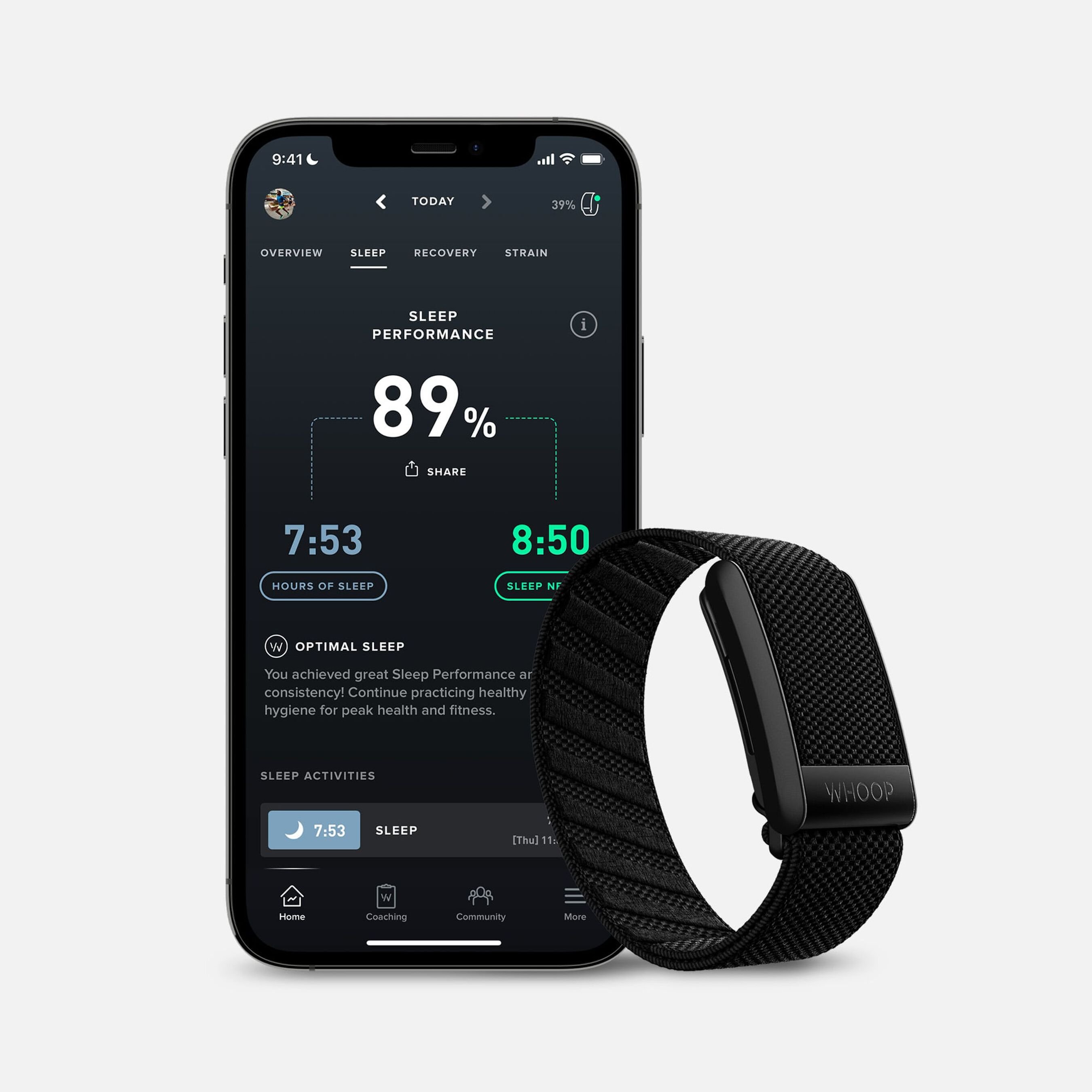
⭐ Featured in this article
Whoop 4.0 Wearable Health & Recovery Tracker with Membership
Who Should Buy This
If you're serious about understanding your body's recovery patterns, Whoop 4.0 deserves your attention. This is built for people who train hard—whether that's competitive athletes, dedicated fitness enthusiasts, or anyone tracking multiple workouts per week. You're the type who wants to know why you're fatigued, not just that you are.
Whoop shines if you value sleep quality insights, HRV (heart rate variability) data, and strain measurement. The continuous 24/7 monitoring gives you recovery scores that actually reflect your body's readiness, which makes a real difference when deciding whether to push hard or back off. If you've been frustrated by fitness trackers that only give you snapshots of your health, Whoop's always-on approach fills that gap.
You should also consider Whoop if you don't mind carrying your phone to check metrics. The screenless design isn't a compromise for everyone—some find it liberating, others find it annoying. If you're someone who gets distracted by constant notifications, you'll probably appreciate the intentional design that keeps you focused on the app insights rather than wrist vibrations.
Who Should Skip It
First consideration: the subscription model. At roughly $30 monthly, you're looking at $360 per year on top of the hardware cost. Over three years, that's the price. If you're budget-conscious and view wearables as a one-time purchase, this ongoing commitment might feel heavy. Be honest with yourself about whether you'll use this consistently.
Skip Whoop if you want a display on your wrist. Some people need instant feedback without reaching for their phone. If you're checking stats during workouts, mid-meeting, or while your hands are full, the screenless design becomes a genuine limitation rather than a feature. You can't quickly glance at your recovery score while deciding whether to take that run today.
Casual fitness trackers users should look elsewhere. If you're getting 10,000 steps daily and doing occasional workouts, Whoop is overkill. The detailed insights become genuinely useful only when you're actively training multiple times weekly. You'd spend $360 annually for features you wouldn't leverage.
Also reconsider if you have privacy concerns about continuous physiological monitoring. Whoop collects detailed biometric data 24/7, and while the company has strong privacy policies, this level of tracking isn't for everyone.
Key Features to Evaluate
Continuous HRV Tracking: This is Whoop's strongest asset. Heart rate variability indicates nervous system stress recovery. Unlike smartwatches checking HRV once daily, Whoop monitors constantly, giving you a far more complete picture. If you're optimizing performance, this data genuinely changes how you'll adjust training.
Strain Score: Whoop measures workout intensity and cumulative daily strain. This helps you understand which activities actually stress your system—crucial for avoiding overtraining. The accuracy here is noticeably better than competitors because of the continuous monitoring.
Sleep Tracking: On-wrist charging means you never remove the device, preserving sleep tracking integrity. You get data on sleep duration, quality, and its relationship to recovery. This alone guides smart training decisions.
Recovery Readiness: Whoop synthesizes HRV, sleep, and resting heart rate into a daily recovery percentage. It's the actionable output you use to decide "go hard today" or "recover today." The accuracy depends on consistent wearing, which the design facilitates.
The Screenless Design: Evaluate this honestly. It eliminates notification fatigue and keeps your focus on intentional app review rather than constant wrist-checking. For some, this is perfect. For others, it's a deal-breaker. Neither reaction is wrong.
Price vs Value
The entry feels reasonable for a specialized recovery tracker, but the full financial picture is what matters. Annual cost reaches its current price. Over two years, you're at its current price. That's premium smartwatch territory.
The value calculation hinges on one question: will this data change your decisions? If you're someone who trains by feel, Whoop might not justify the cost. But if you consistently overtrain or struggle with recovery optimization, the granular HRV data and recovery scores often pay for themselves through better-informed training adjustments.
Compare this to Oura Ring (its current price plus ~$6/month) or standard fitness smartwatches (its current price with no subscription). Whoop costs more long-term but delivers superior continuous HRV tracking. It's the specialist option—higher investment, higher capability.
Our Verdict
Whoop 4.0 earns its 9.0 rating because it delivers measurably better recovery insights than competitors, and the engineering supports that claim. Continuous HRV monitoring, no-remove charging, and actionable daily scores create real value for serious athletes and dedicated fitness enthusiasts.
The mandatory subscription and lack of onscreen display are genuine tradeoffs, not minor limitations. You need to accept both to enjoy the device. If you do—and especially if you train regularly—Whoop becomes a smart investment in understanding and optimizing your body's recovery.
Commit to this only if you'll use the app regularly and trust data-driven training adjustments. Otherwise, explore simpler alternatives. For the right person, Whoop is excellent. For everyone else, it's expensive.
Ready to buy?
Whoop 4.0 Wearable Health & Recovery Tracker with Membership
View on Amazon →Affiliate link — we may earn a commission at no extra cost to you
Get AI-curated deals like these every week
Free picks from our research engine. No spam — unsubscribe anytime.
No comments yet — be the first to share your experience.